If you manage a fleet in Asheville, you live by one rule: trucks and vans only make money when they roll. Nothing stalls a route faster than a cracked windshield or a side window that will not close. Between the morning fog on the Blue Ridge, sudden gravel kicks on I‑240, and tight delivery schedules across 28805 and the surrounding zip codes, auto glass problems are not rare. What matters is how quickly and correctly you handle them, without throwing the day’s dispatch into a tailspin.
I have spent years coordinating mobile crews for fleets that range from three service vans to a hundred mixed units. The pattern is the same. A customer calls at 7:10 a.m. because their driver reports a spreading crack near the A‑pillar. If you can get an installer to that truck by mid‑morning and complete a windshield replacement, calibration, and cure within a realistic window, the route saves thousands over the month. If you cannot, you start comping deliveries and shuffling jobs. The difference comes down to planning, glass sourcing, mobile tactics, and a no‑drama process on the lot.
What “mobile” really means for a fleet in 28805
Mobile auto glass in Asheville covers more than a technician in a van. It means bringing the right windshield or side glass, the correct molding and clips, the specific urethane, and, when needed, the calibration system to your yard or job site. In the 28805 area, that might be a warehouse off Tunnel Road, a medical campus in Oteen, or a staging lot near the parkway. The aim is to keep keys in your drivers’ hands and the odometer ticking.
For fleets with modern vehicles, mobile work often includes ADAS tasks: forward camera recalibration after windshield replacement, radar alignment checks, and verification runs. Many models built since 2016 require some form of ADAS calibration after glass replacement. Skipping it risks malfunctioning lane‑keep or adaptive cruise, which is a safety issue and a liability. That is why you want a provider equipped for windshield calibration asheville 28805, with technicians trained to handle static and dynamic procedures at your site whenever the OEM procedure allows.
Safety, liability, and why tempo matters
Every cracked windshield is a time problem and a safety problem. When I evaluate risk, I look at three things. First, visibility and crack dynamics. A star break in the driver’s field of view turns into glare and refraction that slow decision making, often by fractions of a second. Second, structural integrity. On most vehicles, the windshield supports airbag deployment and roof strength. Third, electronics. Cameras, infrared heaters, rain sensors, and heads‑up display elements all live in or around the glass. Mishandling any of those puts drivers and other road users at risk.
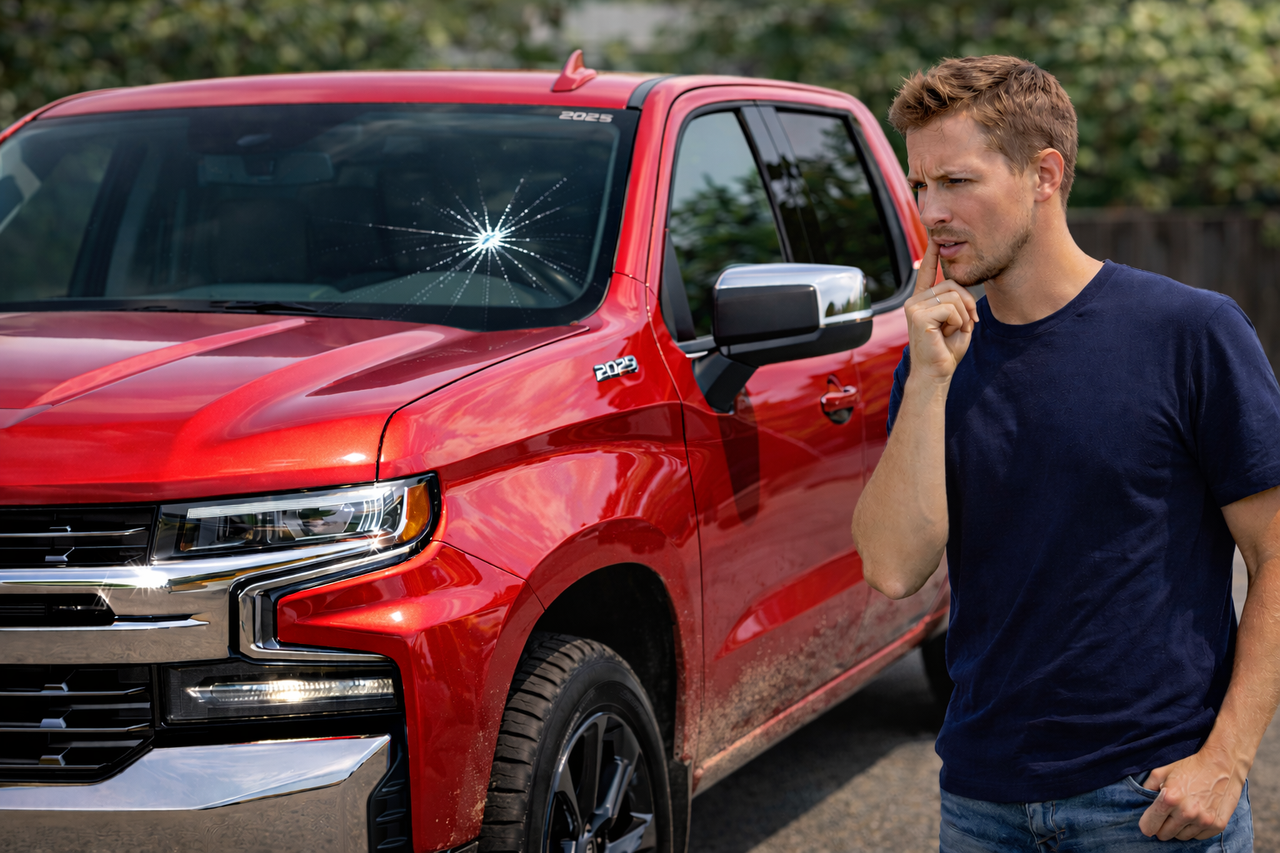
On tempo, a mobile crew should pivot quickly across the Asheville grid. Calls from 28805 are often mixed with service requests in 28803 and 28804 by late morning, and there will always be a last‑minute add from 28806. A seasoned dispatcher groups jobs by adhesive cure time, traffic patterns, and part availability. Morning dew and winter cold can extend safe drive‑away times unless the urethane is rated for low temperatures. Your provider should plan around that and offer realistic windows for Asheville windshield replacement 28805, with documentation of drive‑away readiness.
How route‑savvy mobile teams work a fleet lot
The most reliable crews treat your yard like a production line. They show up with windshields staged by VIN, labeled molding sets, and the calibration rig already updated with model‑specific targets. A typical day on a fleet lot looks like this:
- Pre‑check and staging: verify VIN, options, and camera type, then lay protective covers and cart in the glass. Removal and prep: cut out the old windshield, clean and prime the pinch weld, and prep the new glass with the correct primer system. Set and seal: place the glass with a mechanical set device to avoid twist and ensure even bead compression. ADAS calibration: perform static target alignment when required, then run dynamic calibration on a safe test loop if the OEM procedure calls for it. Cure and sign‑off: confirm safe drive‑away time, reinstall trim and sensor housings, and deliver fitment and calibration proof to your fleet portal.
That sequence keeps installers from stepping on each other while you keep normal operations running. I have seen three‑bay warehouses turn around five windshields before lunch when staging is tight and communication is clear.
Asheville realities: weather, roads, and parts
Asheville brings its own quirks. Morning humidity at elevation means more glass prep and more caution against contamination before setting the urethane. Gravel from mountain construction sites is a constant source of rock chips on the 26/240 corridors. And we see a lot of vehicles that straddle trim lines, which matters when you choose parts. A Ram ProMaster with a rain sensor takes a different windshield than the same year without. A Transit with a heated zone for wipers needs the correct connectors. In short, “close enough” parts invite callbacks.
Sourcing both OEM glass and high‑quality aftermarket glass makes sense. OEM glass is your safer bet for complex cameras, HUD, and acoustic laminates, especially on newer SUVs, while aftermarket can be perfectly acceptable on many work vans that prioritize durability and cost. The right call changes by model and year. For example, I often recommend OEM glass for 2020‑plus Subaru Eyesight systems and late‑model Toyotas, because those cameras can be picky. On older fleet units without advanced sensors, a name‑brand aftermarket windshield can be a smart choice that saves 20 to 35 percent.
Repair first when it is smart
Not every chip deserves a replacement. Rock chip repair in Asheville 28805 can keep a van in service and protect margins if the break is recent, small, and outside the driver’s direct view. A typical resin injection takes 20 to 30 minutes and can salvage a shield that might otherwise be sidelined. The judgment call hinges on size, location, and contamination. A long crack or a break at the edge is a different story. Once a crack runs more than a few inches, especially near the binding edge or into the driver’s sight path, you are buying time at best.
I keep a simple filter for dispatchers. If the damage fits under a quarter and sits at least a few inches from the perimeter, plan a same‑day repair. If not, schedule replacement and calibration. For borderline cases, a quick technician check saves debate.
Calibration is not optional
I have seen well‑meaning operations skip calibration to “get the truck out,” only to have a lane‑keep system tug the wheel in the wrong direction later that day. If a vehicle has a forward camera, radar behind the glass, or HUD that aligns to the windshield, assume calibration is required after replacement. Many procedures specify static steps using targets at precise distances and heights, plus dynamic steps during a drive. The best crews maintain windshield calibration capability across Asheville 28805 and the neighboring 28801, 28803, and 28806 zones, so multi‑site fleets get consistent results.
If your fleet mixes brands, ask your provider for their coverage list. A shop that handles ADAS calibration asheville 28805 for Ford, GM, Stellantis, Toyota, Honda, Subaru, and Mercedes vans and SUVs will likely cover most fleets. For box trucks and specialty glass, verify lead times and whether calibration must occur at a facility rather than on‑site.
Cure times and the myth of instant drive‑away
Modern urethanes give fast safe drive‑away in many conditions, but they are not magic. Temperature, humidity, bead size, and vehicle design matter. In warm Asheville afternoons, premium urethanes can hit safe drive‑away in about an hour on many vehicles. Cold mornings near 35 to 45 degrees, or heavy glass with thick beads, can stretch that window to two or three hours even with the right product. A professional will give you a realistic window and plan the day’s queue so drivers are not stranded.
One trick for busy lots: rotate replacement order based on route release times. Replace the glass on the vans that leave last, so cure windows overlap idle time. On a mixed shift with returns at 1 p.m., hit those units first so they can relaunch for the afternoon routes.
Cost control without penny wise mistakes
Fleets care about unit cost, but they care more about total cost per mile. Auto glass touches both. A cheaper glass that complicates calibration or introduces distortion costs more in callbacks and driver complaints. On the other hand, paying OEM rates on every base work van with no sensors wastes budget. The move is to segment your fleet.
I usually bucket vehicles into three tiers. Tier one is high‑spec units with cameras and HUDs. These get OEM glass and full calibration every time. Tier two is mainstream vans or trucks with rain sensors or heated wiper zones but no forward camera. These can take quality aftermarket glass if fit and optics test out, though OEM is still a safe choice. Tier three is legacy units or temporary rentals with basic glazing. Here, cost and speed rule, as long as you maintain safety standards.
Insurance plays into this. Many carriers cover windshield replacement or chip repair with favorable terms, especially for safety systems. A good partner will navigate insurance windshield replacement asheville 28805 with your fleet manager and pre‑clear claims to shorten cycle time.
Why dispatch discipline beats discounts
I once supported a service company in 28805 with 27 vans. Their costs fell by a third in a quarter, not because they found cheaper glass, but because they tightened the request‑to‑install pipeline. Instead of calling randomly throughout the day, drivers reported chips at the end of the morning route, and the manager issued consolidated work orders. Our team staged parts and hit four vans at a time, alternating replacements with chip repairs. That cadence kept everyone in motion and slashed the number of reschedules.
The lesson holds for any fleet. Set two windows per day for glass work requests, align those with your provider’s mobile runs across 28805 and the nearby 28803 and 28804 routes, and let installers sync to your rhythm. The result is fewer phone calls, fewer missed connections, and more trucks back on the road.
What a strong fleet glass partner looks like
A shop that handles single retail jobs can struggle with fleet speed. You want a partner that speaks in VINs, not vague model names, and that can swap between mobile windshield replacement asheville 28805 and on‑site calibration without drama. They should also support other glass needs that pop up on fleets: side window replacement, back glass replacement, and quick rock chip repair.
Ask about their parts library and logistics. Do they stock common fleet windshields for your models? Can they source same‑day from distributors in 28801 or 28806 when a curveball lands? Do their techs carry both OEM glass asheville 28805 and reliable aftermarket options? The right answer is rarely “we only use one type.” Flexibility keeps wheels turning.
A brief note on neighborhoods and coverage
Fleet operations rarely stay in one zip code. While this article centers on fleet mobile windshield replacement in Asheville 28805, the same mobile crews often service the city end to end. Routes take you through 28801 downtown, up into 28804, across 28803 south of the river, and into 28806 west of town. If you dispatch beyond the city core, confirm that your provider can handle mobile auto glass asheville 28801 through 28806 and the smaller codes like 28810, 28813, and 28814. One system, one contact, all zones.
You will also want the same consistent approach for targeted services: asheville auto glass repair 28805 for quick fixes, asheville windshield replacement 28805 for full swaps, windshield chip repair asheville 28805 for tiny breaks before they spread, and calibrated reinstallation when the job demands it.
Where process meets the windshield
When crews roll onto a lot, they bring a process honed by repetition. The difference between an average install and a fleet‑grade install is a hundred small decisions: removing cowl panels without snapping aging clips, priming the pinch weld exactly once with the correct dwell time, setting glass without smearing the bead, capturing the VIN and options, and confirming that a rain sensor sits flush with no air gap. On the back end, it is paperwork that makes life easier: photos of the bead and set, calibration screenshots, drive‑away time stamped to the minute, and the warranty pinned to the unit ID.
The payoff lands later. When a driver hears wind after a high‑speed run on I‑26, you can reference the job file and know whether you need a quick molding re‑seat or something more. And if a sensor throws a code, you have calibration data to compare.
One field story: three vehicles, one morning
We had a client off New Haw Creek Road with a mixed fleet: two Transit 250 vans, one with a forward camera, and a Silverado 1500 with a small star break. The morning started at 7:30 with fog clinging to the hills. We ran the Silverado chip repair first, under a canopy to keep moisture out of the resin. Twenty minutes later, the driver left for a 9 a.m. appointment.
For the Transits, we staged both windshields, confirmed the camera variant by scanning the VIN, and chose OEM glass for the ADAS unit, high‑quality aftermarket for the base van. Removal took an hour for both, including careful cowl removal and rust spot treatment on one pinch weld. We used a cold‑weather urethane because the lot still sat below 50 degrees in the shade. Glass set with a fixture to avoid bead smear.
Calibration for the camera van was static first, with the target measured to the millimeter, then a short dynamic drive along a quiet stretch we use east of town. By 10:45, both vans had safe drive‑away times pinned, and the manager had a PDF packet in the fleet folder. Two routes saved, no reschedules.
Common pitfalls and how to avoid them
Some mistakes are predictable. A windshield arrives for the right model but the wrong trim, missing the bracket for a mirror camera. The fix is better VIN decoding up front. Or an installer rushes cure time because the driver pressures them, only to see a shift in the upper corner after a highway run. The fix is a firm policy and adhesives selected for Asheville’s temperature swings.
The more insidious problems come from calibration shortcuts. If the target stands a half inch too low, the camera may pass but track poorly on the road. Or a dynamic calibration that happens on a road with poor lane markings fails silently. A serious shop tests afterward. Lane departure should engage where expected, and forward collision warnings should not trigger randomly. A short supervised test confirms that.
Keeping your downtime predictable
A fleet manager’s real success metric is predictability. You can work around a two‑hour pause if you know it is coming. Mobile windshield work, chip repair, and ADAS calibration in 28805 and the broader Asheville market can all be woven into your day with planning. Align a few simple practices:
- Consolidate break/fix requests into two daily windows and share a rolling 7‑day forecast of vehicles due for glass work, however rough. Track VIN‑level options in your fleet system so your provider can stage the correct parts without a scouting trip.
That small discipline pays. Most fleets that adopt it see fewer missed appointments, less idle time, and lower total glass spend over the quarter.
When urgency wins: same‑day and emergency calls
Not every failure can be scheduled. A rear door glass shatters on a job site, or a stray stone wipes a driver’s view on I‑240. Same‑day auto glass service exists for those moments. In Asheville 28805, the response time depends on part availability and your location in the day’s route. Many common fleet windshields and side glasses are on hand, or can be sourced from distributors in 28801 or 28806 within hours. The key is to call with the VIN ready. If calibration is required, confirm whether the environment at the site is suitable. If not, a quick relocation to your yard or a nearby flat lot can make the difference.
Emergency auto glass crews that know Asheville will also triage over the phone. A baseball‑sized break near the edge on a work truck that can park under cover might wait a few hours to align with other stops. A spreading crack that has crossed the driver’s sight line deserves priority.
A word on side and back glass
Windshields dominate the conversation, but side and back glass incidents are the real schedule killers. A shattered slider on a van makes it impossible to secure tools. A auto glass 28802 blown back glass on a pickup leaves the cab exposed when rain threatens. Mobile teams can handle side window repair and side window replacement, plus back glass replacement, on the lot. These jobs do not involve ADAS, but they do demand clean installs so regulators run smoothly and seals do not whistle. On a rainy day in Asheville, a pop‑up canopy and a clean workspace make or break these jobs.
Align glass service with your brand and driver morale
Drivers notice whether you fix their windshield promptly and with care. They notice if the rain sensor works and the wiper heaters kick on during a cold snap in Oteen. Those details tie back to morale and retention. A fleet that moves quickly on windshield chip repair, handles cracked windshield calls without drama, and treats calibration as standard sends a message: we invest in safety and in you.
Brand matters too. If your vehicles carry your name across 28805 and neighboring zip codes, a clean install with tidy moldings and no wind noise says you care about quality. Customers notice.
Bringing it together
A fleet in Asheville lives with constant motion and a backdrop of mountains that look beautiful until a sudden temperature swing throws dew onto every windshield. Mobile windshield replacement and repair serve that reality, not the other way around. The best operations treat auto glass as a controlled process that dovetails with dispatch, safety, and cost control. They move across 28805 and the larger Asheville area with an installer’s patience and a dispatcher’s clock.
If you want a short checklist to tighten your program, keep it simple. Share VIN‑level data, schedule in predictable windows, calibrate whenever the vehicle calls for it, and let your provider stage OEM or aftermarket glass based on the unit’s complexity. When that rhythm settles in, the metrics you actually care about improve: fewer missed appointments, safer miles, steadier routes. That is how you keep vehicles moving.